In short: Retail media incrementality estimates the outcomes caused by advertising rather than counting every exposed sale. A credible design defines the eligible population, creates a comparable control and measures the difference using the same time window and outcome rules.
Key takeaways
- Choose the test unit—store, geography or audience—before campaign activation.
- Keep eligibility, promotions and measurement windows consistent across test and control groups.
- Report uncertainty and operational limitations alongside the lift estimate.
Choose the unit that matches the media
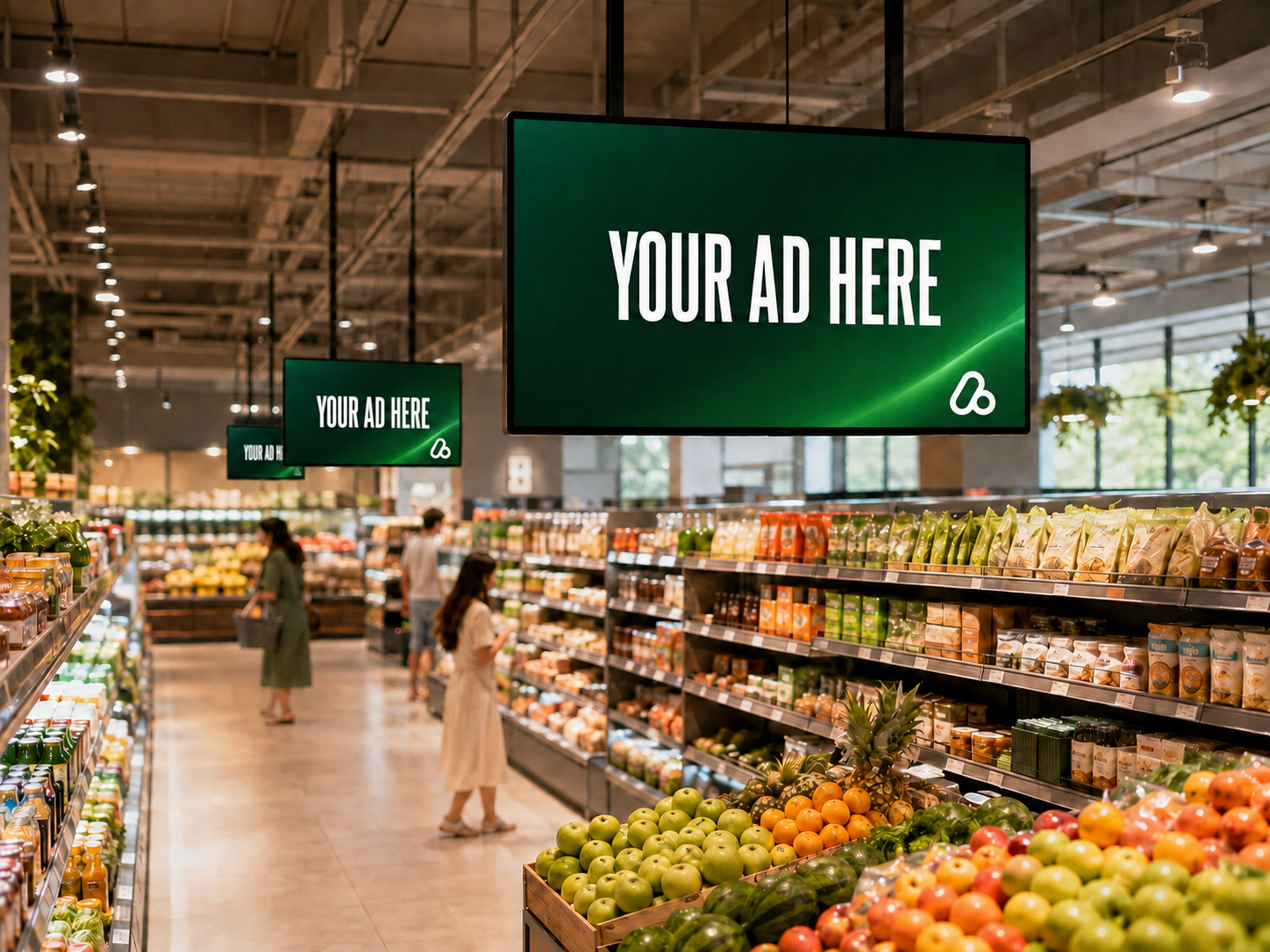
In-store screens often require store- or geography-level tests, while authenticated digital retail placements may support audience holdouts. The unit must match how exposure is delivered. Mixing units after launch makes the comparison difficult to defend.
Control for retail conditions
Price changes, stock availability, holidays and retailer promotions can move sales independently of media. Record these conditions for both groups and avoid presenting raw sales differences as advertising lift when the operating context changed.
Connect the result to the next plan
Incrementality is most valuable when it changes allocation. Preserve the test design, audience definition and confidence range so the next campaign can compare results on the same basis instead of starting a new measurement language.
Frequently asked questions
Is return on ad spend the same as incrementality?
No. ROAS divides attributed revenue by media cost. Incrementality asks how much of the outcome would not have happened without the advertising.
Can an in-store screen campaign use audience holdouts?
Sometimes, but store- or geography-level controls are often more practical because physical screen exposure cannot always be assigned at the individual level.